

Why Improving Body Function Matters for Your Health and Vitality
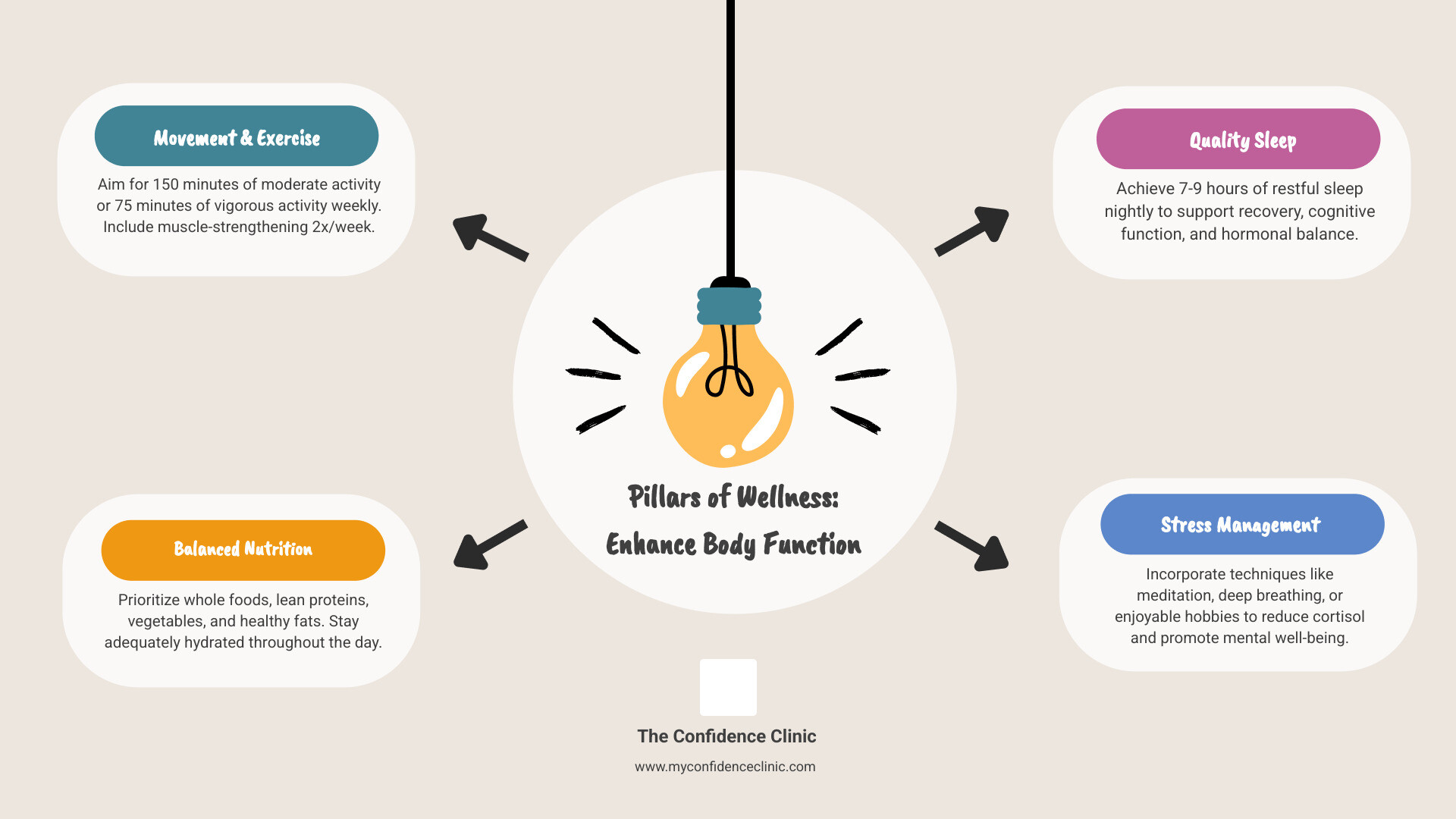
To improve body function, focus on four core pillars: regular physical activity, balanced nutrition, quality sleep, and stress management. These habits improve energy, mood, metabolism, and muscle strength while reducing disease risk.
Key strategies to improve body function:
- Move more – Combine aerobic, strength, and flexibility work.
- Eat smart – Prioritize whole foods like lean proteins, vegetables, and healthy fats.
- Sleep well – Aim for 7-9 hours nightly with a consistent schedule.
- Manage stress – Use exercise, meditation, or breathing techniques.
- Stay hydrated – Drink plenty of water daily.
- Address hormones – Consider professional evaluation if symptoms persist.
Many struggle with health habits; statistics show only about one in five adults and teens get enough exercise. This can lead to various health conditions, but small, consistent changes make a big difference. Your body is an interconnected system where physical and mental health influence each other. Exercise boosts mood by releasing endorphins, while good mental health provides the motivation for healthy routines.
The path to better body function requires consistency, patience, and sometimes professional guidance for underlying issues like hormonal imbalances.
I’m Dr. Mo Cale DO, Medical Director of Center for Confidence. I specialize in helping patients improve body function through hormone optimization, lifestyle changes, and regenerative treatments. For over a decade, I’ve helped hundreds in the Tampa Bay area restore their vitality by addressing foundational wellness and underlying medical factors.
The Foundation: Movement and Exercise to Improve Body Function
To improve body function, movement is critical. Our bodies are designed for it, and regular physical activity supports everything from bone strength to mental clarity. The goal is to integrate various types of movement into daily life.
The Physical Activity Guidelines for Americans, 2nd edition recommend adults get at least 150 minutes of moderate-intensity (or 75 minutes of vigorous-intensity) aerobic activity weekly, plus muscle-strengthening activities on two or more days. A well-rounded routine includes:
- Aerobic Exercise: Activities like brisk walking or swimming that get your heart pumping. This improves heart and lung health and reduces chronic disease risk.
- Muscle-Strengthening: Exercises like lifting weights or doing push-ups that make muscles work harder, increasing their strength and endurance.
- Flexibility Exercises: Activities like stretching or yoga that improve a joint’s range of motion, reducing stiffness and injury risk.
- Balance Exercises: Movements like Tai Chi or standing on one foot that maintain stability and reduce the risk of falls, especially as we age.

Building Strength and Flexibility for a Resilient Body
Strength and flexibility are key for a resilient body. Strength training is crucial for muscle strength, bone density, and joint health, counteracting age-related decline and reducing injury risk. It also offers 4 surprising health benefits of strength training, like better mood and sleep. Strong muscles are essential for functional independence, making daily tasks easier and helping to prevent falls.
Flexibility is equally important, allowing joints to move freely, which improves posture and reduces aches.
- Strength Exercises: Squats, push-ups, planks, rows, and lunges.
- Flexibility Exercises: Hamstring and quad stretches, yoga poses (e.g., Downward Dog), and Tai Chi.
Aim for 2-3 sets of 8-12 repetitions for strength exercises, working muscles to the point of needing a short rest.
Understanding Exercise Intensity for Maximum Benefit
Understanding exercise intensity helps you tailor workouts to improve body function.
- Moderate-Intensity: Your heart rate increases, but you can still hold a conversation (the “talk test”). Examples include brisk walking, water aerobics, and social dancing.
- Vigorous-Intensity: You’re breathing hard and fast, able to speak only a few words at a time. Examples include running, swimming laps, and hiking uphill.
You can also use a target heart rate for a more precise measure: 50-70% of your max heart rate for moderate activity and 70-85% for vigorous.
| Activity | Moderate-Intensity Example | Vigorous-Intensity Example |
|---|---|---|
| Walking/Hiking | Brisk walk (can talk) | Hiking uphill or with a heavy backpack (hard to talk) |
| Cycling | Biking slower than 10 mph (leisurely pace) | Cycling 10 mph or faster (challenging pace) |
| Swimming | Recreational swimming (can maintain conversation) | Swimming laps (continuous effort, few words) |
Overcoming Common Barriers to a Consistent Routine
Sticking to an exercise routine can be tough. Here’s how to overcome common barriers to improve body function:
- “I don’t have time.” Break activity into short 10-15 minute bursts. Even small amounts of movement, like taking the stairs, add up. Schedule workouts like any other appointment.
- “It costs too much.” You don’t need a gym. Walking, running, and bodyweight exercises (squats, push-ups) are free. The Tampa Bay area has many parks and trails. You can also find free workout videos online.
- “It’s too difficult.” Start small with light activities you enjoy, like walking or gardening, and gradually increase the duration or intensity. If you have a chronic condition, consult your healthcare provider before starting a new program.
To make habits stick, find enjoyable activities, start small, schedule your workouts, and find a friend for support. Consistency is more important than perfection.
Fueling Your Body: The Critical Role of Nutrition and Hydration
Proper nutrition and hydration are essential to improve body function. What we consume directly impacts our energy, mood, performance, and long-term health. A healthy diet focuses on balance, variety, and moderation with whole, unprocessed foods.
- Macronutrients: Your body needs these in large amounts.
- Protein: Builds and repairs tissues (lean meats, fish, legumes).
- Carbohydrates: The body’s primary energy source (whole grains, fruits, vegetables).
- Fats: Crucial for hormones and nutrient absorption (avocados, nuts, olive oil).
- Micronutrients: Vitamins and minerals from a diet rich in colorful fruits and vegetables are vital for countless bodily functions.
- Hydration: Water is fundamental for everything from temperature regulation to mental performance. Even slight dehydration can impair mood and attention.

How Nutrition Helps to Improve Body Function
Fueling yourself properly directly helps to improve body function.
- Supporting Exercise Goals: Nutrition is a game-changer for physical activity. Carbs provide energy, while protein is crucial for muscle repair. As detailed by the Sports nutrition – Mayo Clinic, timing meals and staying hydrated can optimize performance and recovery.
- Weight Management: A diet of whole foods and controlled portions is the cornerstone of maintaining a healthy weight and reducing chronic disease risk.
- Reducing Inflammation: A diet rich in anti-inflammatory foods like leafy greens, berries, and fatty fish can help reduce systemic inflammation and pain.
- Making Smart Choices: Prioritize whole foods (fresh fruits, vegetables, lean meats) over processed foods, which are often stripped of nutrients and high in added sugar and unhealthy fats. Reading nutrition labels helps you follow federal dietary guidelines by avoiding excess sodium and sugar.
Explore Our Wellness Blog Categories for Body Function Tips
The mind-body connection is undeniable. To truly improve body function, we must recognize that physical and mental health are deeply interconnected. Physical activity is a powerful tool for mental wellness. Exercise releases “feel-good” endorphins that lift mood, reduce anxiety, and improve self-esteem. Research confirms The Influence of Exercise on Cognitive Abilities, showing benefits like improved thinking and stress reduction.
Good mental health, as the Mental Health Foundation notes, allows us to cope with stress and realize our potential. This mental strength helps us maintain the healthy habits needed to improve body function.
Enhancing Sleep, Energy, and Sexual Health
Physical activity also improves other critical areas of well-being:
- Sleep Quality: Regular exercise can dramatically improve sleep, helping you fall asleep faster and sleep more deeply. Just avoid vigorous workouts too close to bedtime.
- Energy Levels: Exercise boosts energy by improving cardiovascular efficiency, sending more oxygen and nutrients to your tissues. This gives you more stamina for daily activities.
- Sexual Health: Physical activity can improve your sex life by boosting energy and confidence. For men, it lowers the risk of erectile dysfunction, and for women, it may improve arousal. If you’re in the Clearwater area and facing challenges, specialized Erectile Dysfunction Treatments in Clearwater can help.
Improving Specific Body Functions and Managing Conditions
Regular exercise can also help manage specific conditions:
- Incontinence and Constipation: These common issues are often linked to a sedentary lifestyle and weak pelvic floor muscles. Regular physical activity, especially pelvic floor exercises, can significantly improve bladder and bowel control.
- Chronic Disease Management: Physical activity is a powerful tool for managing chronic conditions. For those with type 2 diabetes, it helps control blood sugar. For heart disease, it strengthens the heart. As noted in the official Health Benefits Associated with Physical Activity for People with Chronic Conditions and Disabilities, it can reduce pain and improve function for people with arthritis. A holistic approach is also vital for conditions like those affecting Thyroid Health in Clearwater.
Advanced Strategies: When Lifestyle Changes Aren’t Enough
While lifestyle changes are crucial to improve body function, sometimes they aren’t enough. When your body doesn’t respond as expected, it may point to underlying factors like age-related hormonal changes.
As we age, shifts in hormones like testosterone and Human Growth Hormone (HGH) can impact metabolism, energy, and body composition. Declining testosterone, as detailed by Harvard Health, can lead to a slower metabolism, muscle loss, and stubborn belly fat, making it hard to lose weight. If you suspect this is an issue, exploring Low Testosterone Treatment in Clearwater could be a vital step. Similarly, a decrease in HGH can contribute to fatigue and weight gain.
These imbalances can feel like an uphill battle, which is where professional guidance becomes invaluable.
How to holistically improve body function with professional guidance
When lifestyle changes fall short, a functional medicine approach can help improve body function by identifying and addressing the root causes of health issues with a personalized plan.
At Center for Confidence, our Wellness Clinic in Clearwater, we specialize in this approach. We understand that issues like fatigue, weight gain, or low libido often stem from complex factors. Our evaluation may include:
- Hormone Testing: Comprehensive testing to assess key hormone levels.
- Bioidentical Hormone Therapy: Treatments like Bioidentical Hormone Therapy in Clearwater can restore hormones to optimal levels, improving energy, mood, and metabolism.
- Peptide Therapies: Advanced treatments like Anti-Aging Peptides Clearwater can support regeneration and vitality.
- Personalized Lifestyle Plans: We integrate these treatments with custom nutrition, exercise, and stress management plans for sustainable results.
We provide a comfortable, non-judgmental space to discuss your concerns and empower you with custom treatments to help you thrive.
Frequently Asked Questions about Improving Body Function
How quickly can I see improvements in my body function?
The timeline varies. You might feel more energetic and sleep better within days or weeks of consistent activity. More significant changes like weight management or muscle gain can take several weeks to months. Consistency is key; small, sustainable changes yield the most lasting results.
What’s the single most important thing I can do to start?
The most important first step to improve body function is to start moving more and sitting less. Begin with an enjoyable activity, like a 10-15 minute brisk walk daily, and gradually increase the duration. This simple step kickstarts your metabolism and sets a positive tone for other healthy habits. Always consult a healthcare professional before starting if you have underlying health conditions.
Do I need a gym membership to effectively improve my body function?
No. You can effectively improve body function without a gym. Many effective exercises can be done at home or outdoors with your own body weight. Consider brisk walking in local Clearwater parks, bodyweight exercises like squats and push-ups, or free online workout videos. The most important thing is finding an activity you enjoy and can do consistently.
Conclusion: Take the First Step Towards a Healthier You
We’ve explored how to improve body function through a holistic approach. The combination of consistent movement, balanced nutrition, quality sleep, and stress management is the bedrock of vitality. These habits strengthen our bodies, sharpen our minds, and provide the energy for optimal performance. The path to better body function is a journey of progress, not perfection.
When lifestyle changes aren’t enough, professional guidance can be a game-changer. At The Confidence Clinic in Clearwater, we are dedicated to helping you address the root causes of your health concerns with personalized solutions that integrate functional medicine and lifestyle support. Our goal is to empower you to reclaim your vitality.
Ready to take the first step towards a healthier, more vibrant you? If you’re experiencing discomfort or limitations, addressing your concerns is key. Ready to address joint pain and improve your mobility?


