

Why Understanding Medical Weight Loss Costs Matters Before You Start
How much does medical weight loss clinic cost is a primary concern for those considering a physician-supervised program. Unlike generic diet plans, medical weight loss involves healthcare providers, personalized plans, and often prescription medications or advanced therapies.
Quick Answer: Medical Weight Loss Cost Overview
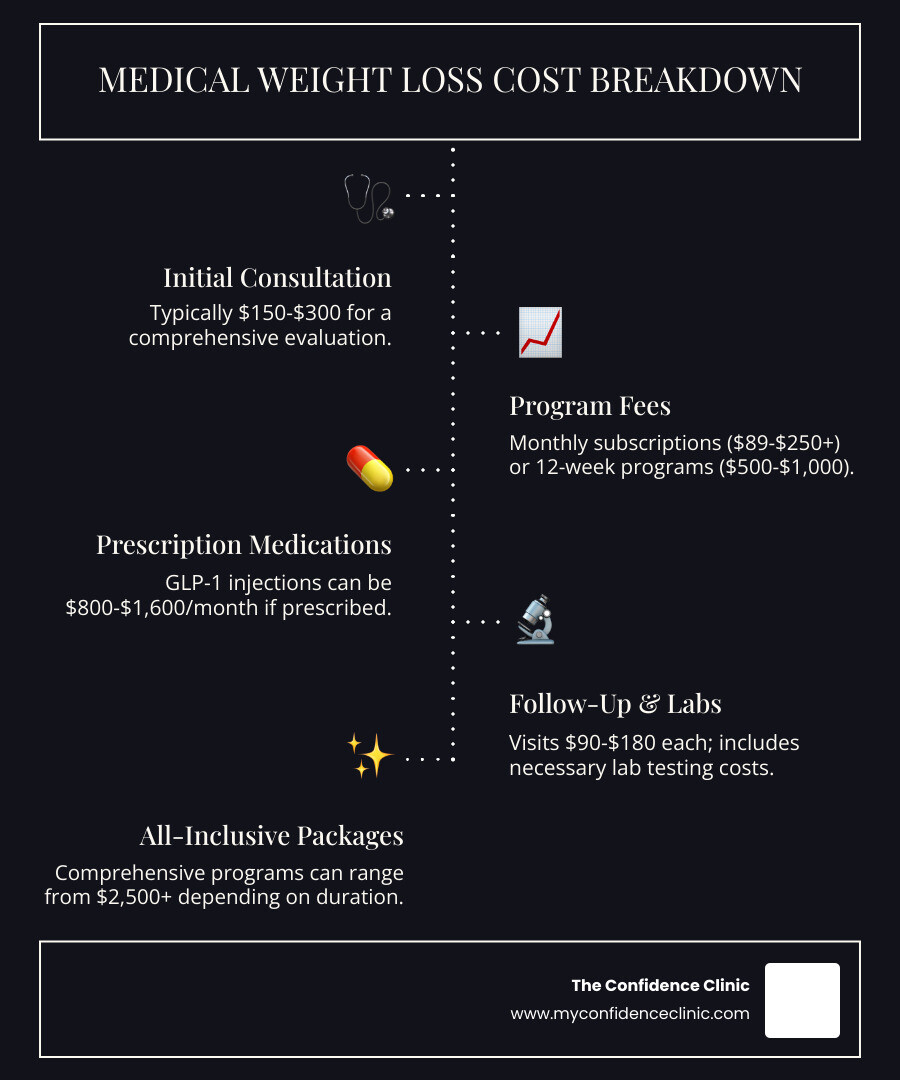
- Typical Program Range: $500 to $3,000+ depending on duration and services
- Initial Consultation: $150-$300
- Monthly Subscriptions: $89-$250+ (may or may not include medication)
- Medication Costs: $800-$1,600/month for GLP-1 injections (if prescribed)
- Follow-Up Visits: $90-$180 per visit
- All-Inclusive Packages: $2,500+ for comprehensive year-long programs
The investment varies based on program duration, medication needs, physician supervision, and included services. Clinics may charge per visit, offer subscriptions, or provide bundled programs. Costs for medications like semaglutide and tirzepatide can be significant, though insurance or HSA/FSA funds may offer relief.
Medical weight loss is a comprehensive, evidence-based approach that addresses the root causes of weight gain—such as hormonal imbalances and metabolic dysfunction—under professional medical guidance. This focus on underlying issues is key to achieving sustainable, long-term change.
As Dr. Mo Cale, a board-certified physician and Medical Director of Center for Confidence in the Tampa Bay area, I’ve guided hundreds of patients through personalized weight management programs. My approach integrates hormone optimization, peptide therapy, and evidence-based lifestyle changes to deliver lasting results.
What’s Included in a Medical Weight Loss Program?
A medical weight loss program is a comprehensive journey with a team of healthcare professionals. At Center for Confidence, our programs are holistic and personalized to your unique physiology and goals, using metabolism and body composition as true indicators of progress. This scientific approach is why evidence-based treatment results show that patients in medically supervised programs can lose significant weight, such as an average of 29 pounds in 13 weeks.
Core Components of a Physician-Led Plan
A physician-led plan integrates medical expertise into every step. Key components include:
- Comprehensive Medical Evaluation: An initial consultation includes a physical exam and a deep dive into your medical history, health status, and lifestyle to identify any underlying conditions affecting your weight.
- Physician Supervision and Health Coaching: A doctor oversees your entire program for safety and effectiveness, while health coaches provide ongoing support and motivation.
- Advanced Testing: Lab tests (CBC, A1C, Thyroid panel) uncover metabolic imbalances. Body composition analysis tracks body fat and muscle mass more accurately than a scale.
- Personalized Nutrition and Exercise Plans: You’ll receive custom diet plans focusing on real foods and exercise guidance custom to your fitness level.
- Behavioral Counseling: This helps you develop lasting healthy habits and address the psychological aspects of eating.
- Regular Follow-Up Visits: Crucial for monitoring progress, adjusting your plan, and providing ongoing support.
The Role of Medications and Supplements
When lifestyle changes aren’t enough, medications and supplements can play a vital, medically-guided role. Our providers at Center for Confidence will assess if these tools are right for you.
- Prescription Medications: When medically justified, clinicians may prescribe FDA-approved medications.
- GLP-1 Agonists (Semaglutide & Tirzepatide): These highly effective injectables mimic natural hormones to reduce hunger, increase fullness, and improve insulin resistance.
- Appetite Suppressants: May be used short-term to help manage hunger and cravings.
- Weight Loss Peptide Therapies: As a specialty at Center for Confidence, these advanced therapies are customized to address specific metabolic pathways. Learn more on our Weight Loss Peptides Clearwater page.
- Vitamin and Lipotropic Injections: Vitamin B12 injections can combat fatigue and boost energy. Lipotropic shots (“Skinny Shots”) contain a blend of compounds like MICC and L-Carnitine to aid fat metabolism.
- Clinic-Recommended Supplements: We may recommend high-quality supplements to address deficiencies and support metabolic function.

The cost of medications like GLP-1 injections can range from $800 to $1,600 per month out-of-pocket. We work with you to explore all options, including insurance and compounded medications, to improve accessibility.
How Much Does a Medical Weight Loss Clinic Cost? A Detailed Breakdown
Understanding the breakdown of costs is key to an informed decision, as the answer to how much does medical weight loss clinic cost is highly individualized. A comprehensive program can range from $500 to $3,000 or more.

Several factors influence the price:
- Program Duration: Shorter programs may have lower upfront costs but lack long-term support.
- Geographic Location: Prices in areas like Clearwater and Tampa, FL, reflect local overhead.
- Clinic Expertise: Specialized clinics with advanced therapies may have higher fees.
- Level of Personalization: One-on-one coaching and customized plans cost more than standardized approaches.
- Inclusion of Medications: Whether medications are bundled or charged separately significantly impacts cost.
Typical Price Ranges and Program Tiers
Clinics in the Clearwater and Tampa areas often offer various pricing structures:
- Initial Consultation Fees: $150 to $300 for the first in-depth visit and plan discussion. Some clinics offer a discounted initial fee (e.g., $180) that includes materials.
- 12-Week Program Costs: A common starting point, these plans may cost $500 to $1,000 and include regular follow-ups.
- Monthly Subscription Models: Ranging from $89 to $250+ per month, these are common for telehealth. Some online programs that include medication average $249/month.
- All-Inclusive Packages: A year-long program could cost around $2,500 out-of-pocket, bundling services for a predictable total.
- Pay-Per-Visit Models: Follow-up visits might cost $90 to $180 per visit, with services like metabolic testing adding around $90.
How much does medical weight loss clinic cost with medications?
Including prescription medications, especially newer drugs, can significantly increase the total cost.
- Out-of-Pocket Medication Costs: Without insurance, GLP-1 injections like semaglutide and tirzepatide can range from $800 to $1,600 per month.
- Compounded Medications: To make treatment more affordable, some clinics may offer compounded versions of these medications, which can be included in a monthly program fee (e.g., $249/month). It’s vital to discuss the sourcing and safety of compounded drugs with your provider.
- Insurance Pre-authorization: Our team often assists with insurance pre-authorization for brand-name medications. However, coverage is never guaranteed and depends on your specific plan’s criteria.
Uncovering Hidden Fees: How much does medical weight loss clinic cost long-term?
To budget effectively, consider these potential additional expenses:
- Follow-Up Visit Fees: If not bundled, these can be $90+ per visit.
- Required Supplements: Specific supplements to support your health can range from $5 to $30+ per product.
- Special Foods: Recommended protein bars or shakes typically cost $15-$20 per item.
- Lab Re-testing Fees: Follow-up lab work might cost around $60 if not covered by insurance.
- Maintenance Phase Costs: Ongoing support after reaching your goal may incur separate fees for less frequent check-ins.
- Holistic Wellness Services: At Center for Confidence, we may recommend additional services like hormone optimization to support your overall well-being. These specialized therapies are priced separately. You can explore our Holistic Wellness in Clearwater offerings.
Always ask for a detailed cost breakdown upfront to understand the full investment in your health journey.
Paying for Your Program: Insurance, HSAs, and Financing
While many programs are considered out-of-pocket expenses, there are avenues to mitigate the financial burden. Insurance is more likely to provide coverage if the program is deemed medically necessary to treat a diagnosed condition like obesity (BMI > 30) or related issues such as Type 2 diabetes or high blood pressure. Always verify coverage with your provider before starting.
Does Insurance Cover Medical Weight Loss?
Coverage varies significantly by plan.
- Medical Necessity is Key: Insurers may cover aspects of weight loss if it’s treating a diagnosed health condition. Services like physician visits, lab testing, and behavioral counseling may be partially or fully covered. Purely cosmetic services are generally not.
- In-Network vs. Out-of-Network: While some clinics don’t accept insurance directly, they can often provide documentation for you to seek reimbursement from your provider.
- Medication Coverage: Some weight loss medications may not be covered. It’s crucial to get pre-approval for any prescriptions. For general guidance on healthy weight management, you can refer to resources like the CDC’s guidance on losing weight.
Using FSA/HSA and Exploring Financing Options
If insurance doesn’t cover the full cost, you have other valuable options.
- Flexible Spending Accounts (FSA) and Health Savings Accounts (HSA): These are excellent tools. Medically supervised weight loss programs are often eligible expenses, especially with a Letter of Medical Necessity from your provider confirming treatment for a condition like obesity. Check with your plan administrator, as every plan differs.
- Payment Plans and Financing: Many clinics offer internal payment plans to spread out the cost. Third-party financing solutions like CareCredit are also a viable option for managing larger expenses. You can also explore other health & wellness offers from Synchrony.
- Tax Deductibility: Fees paid for weight management may be tax-deductible as a medical expense. Consult your accountant about this possibility.
Exploring these avenues can make a comprehensive program more affordable.
The Value Proposition: Comparing Costs and Long-Term Benefits
When evaluating how much does medical weight loss clinic cost, consider the long-term value. A medical weight loss program is an investment in your lifelong health, not just a short-term expense.
Let’s compare medical weight loss with generic commercial diet plans:
| Feature | Medical Weight Loss at Center for Confidence | Generic Commercial Diet Plans (e.g., app-based, packaged meals) |
|---|---|---|
| Cost | Higher initial investment ($500-$3,000+), but covers comprehensive medical care. | Lower initial cost ($20-$60/month), but often requires additional food purchases or lacks medical oversight. |
| Supervision | Physician-supervised, with medical team oversight, lab testing, and medication management. | Self-guided or peer-supported; lacks medical supervision. |
| Personalization | Highly personalized, based on individual physiology, medical history, and metabolic needs. | Standardized plans, often generic and not custom to individual health conditions. |
| Treatment | Addresses root causes, may include prescription medications (GLP-1s, etc.) and peptide therapies. | Focuses primarily on diet and exercise; no medical interventions. |
| Long-Term Success | Sustainable results due to behavioral counseling, medical monitoring, and addressing underlying health issues. | Often leads to yo-yo dieting; lacks long-term medical support for maintenance. |
| Health Impact | Reduces risk of chronic diseases, improves overall health markers, and improves quality of life. | Primarily focuses on weight loss, may not address underlying health issues or prevent disease effectively. |
Losing just 5-10% of your body weight can significantly reduce your risk for chronic diseases like diabetes and heart disease, while also improving joint health, sleep, and immunity.
The long-term benefits are significant:
- Reduced Future Healthcare Costs: Mitigating chronic disease risk can save thousands in future medical bills and prescriptions.
- Improved Quality of Life: The value of increased energy, mobility, and self-esteem is immeasurable.
- Sustainable Results: At Center for Confidence, we empower you with tools for lifelong weight management, supported by a medical team.
Investing in a medical weight loss program is a choice that pays dividends far beyond the initial cost.
Frequently Asked Questions about Medical Weight Loss Costs
Here are answers to common questions about how much does medical weight loss clinic cost:
Can I use my HSA or FSA for a medical weight loss program?
Yes, you can often use HSA/FSA funds for a program prescribed to treat a medical condition like obesity. You will likely need a Letter of Medical Necessity from your provider. Always check with your plan administrator first, as every plan differs. We can provide the necessary documentation to help you use these pre-tax dollars.
Are the medications required, and are they included in the price?
Medications are not always required; it depends on your personalized plan. Costs are typically separate from the program fee, with brand-name GLP-1s costing $800-$1,600/month out-of-pocket. Some programs may include more affordable compounded versions. We discuss all costs transparently and help you explore coverage options.
What’s the cost difference between a program with a doctor versus one without?
Physician-supervised programs have a higher initial cost due to medical expertise and testing. However, they provide greater safety, personalization, and potential for insurance coverage, which can lower the net cost. Non-medical programs are cheaper upfront but lack the oversight to address underlying health issues or manage medications, making the physician-led approach a safer and more effective long-term investment.
Conclusion: An Investment in Your Lifelong Health
Understanding how much does medical weight loss clinic cost is crucial, but see it as an investment in your long-term health.
At Center for Confidence, we believe true weight loss is about addressing root causes, optimizing health, and building sustainable habits. Our holistic approach, cutting-edge therapies, and personalized support ensure your investment yields lasting results. We provide a comfortable, non-judgmental space for you to receive custom, physician-supervised care that improves your overall well-being and reduces chronic disease risk.
Your health is your greatest asset. View medical weight loss not as an expense, but as an invaluable investment in your lifelong health and happiness.
Request an appointment for a personalized weight loss plan with us today and take the first step towards a more confident, healthier you.


