

Understanding Male Testosterone Replacement: What You Need to Know
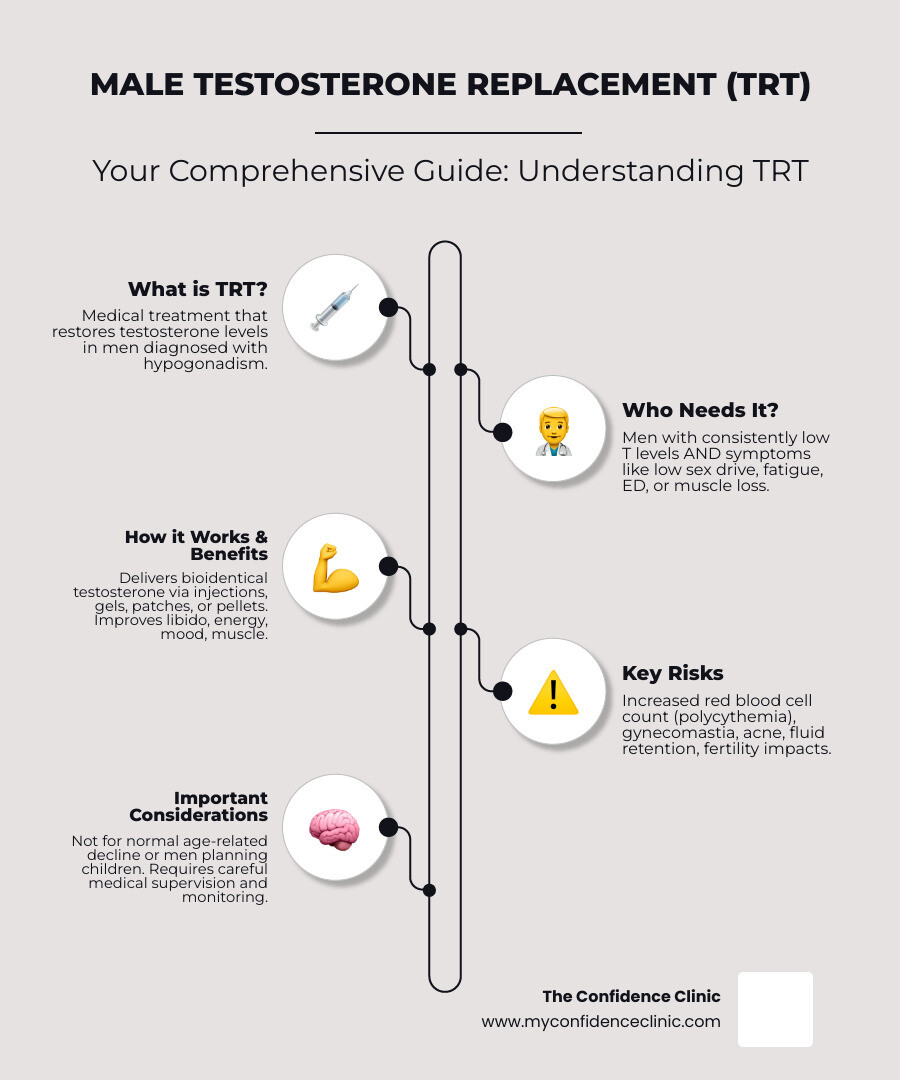
Male Testosterone Replacement (TRT) is a medical treatment that restores testosterone levels in men diagnosed with hypogonadism—a condition where the body doesn’t produce enough testosterone. It’s intended for men with consistently low testosterone levels and symptoms like low sex drive, fatigue, or loss of muscle mass. TRT works by delivering bioidentical testosterone via injections, gels, patches, or pellets to improve libido, energy, mood, and muscle mass. However, it carries risks like increased red blood cell count, acne, and impacts on fertility, and is not for men with normal age-related decline or those planning to have children.
Many men feel tired, unmotivated, or notice a drop in sex drive as they age. While testosterone naturally declines by about 1% per year after age 30, a significant drop can lead to hypogonadism, a diagnosable medical condition. Research shows that 20% of men over 60, 30% over 70, and 50% over 80 have hypogonadism, yet many go undiagnosed as symptoms are often mistaken for normal aging.
TRT isn’t a fountain of youth, but a legitimate medical treatment for diagnosed testosterone deficiency. Under medical supervision, it can restore energy and sexual function, but requires careful monitoring of its risks.
I’m Dr. Mo Cale, DO, Medical Director of Center for Confidence. With over a decade of experience in hormone optimization, I use evidence-based protocols to help men steer TRT. This guide will walk you through everything from diagnosis to treatment, helping you make an informed health decision.
What is Testosterone and Why Do Levels Decline?
Testosterone is an androgen hormone essential for male development and characteristics. Produced mainly in the testicles, it’s vital throughout life. In adulthood, it helps maintain bone density, fat distribution, muscle mass, red blood cell production, sex drive (libido), sperm production, and mood regulation.
Starting around age 30, testosterone levels naturally decline by about 1% annually. For some men, this drop becomes significant, leading to a medical condition called hypogonadism, where the body doesn’t produce enough testosterone. This can be caused by issues with the testicles (primary hypogonadism) or the brain’s regulatory centers (secondary hypogonadism).
The Telltale Signs of Low Testosterone
Symptoms of low testosterone can be varied and overlap with other health issues. A proper diagnosis is key. Common signs include:
- Low sex drive and erectile dysfunction
- Persistent fatigue and lack of motivation
- Loss of muscle mass and increased body fat
- Mood swings, depression, or irritability
- Brain fog or difficulty concentrating
- Hair loss
- Reduced bone mass
Because these symptoms can have other causes (like sleep apnea, thyroid issues, or diabetes), a comprehensive evaluation is essential before considering Male Testosterone Replacement.
How to Get Diagnosed
If you’re experiencing these symptoms, consult a healthcare provider. The diagnostic process at Center for Confidence involves:
- Symptom Evaluation: A detailed discussion of your symptoms and their impact on your life, sometimes using questionnaires like the ADAM scale.
- Physical Exam: To rule out other potential causes.
- Blood Tests: This is crucial for an accurate diagnosis. We require at least two separate fasting morning blood tests (ideally between 7-10 am) to confirm low levels. We measure:
- Total Testosterone: The most common measurement.
- Free Testosterone: The testosterone readily available for your body to use.
- Luteinizing Hormone (LH): Helps determine if the issue originates in the testicles or the brain.
A diagnosis requires consistently low testosterone readings paired with corresponding symptoms.
What Is Male Testosterone Replacement and Who Is It For?
Once hypogonadism is confirmed, Male Testosterone Replacement (TRT) can be considered. TRT is a medical treatment that uses bioidentical hormones to restore testosterone to a healthy range, alleviating symptoms and improving quality of life.
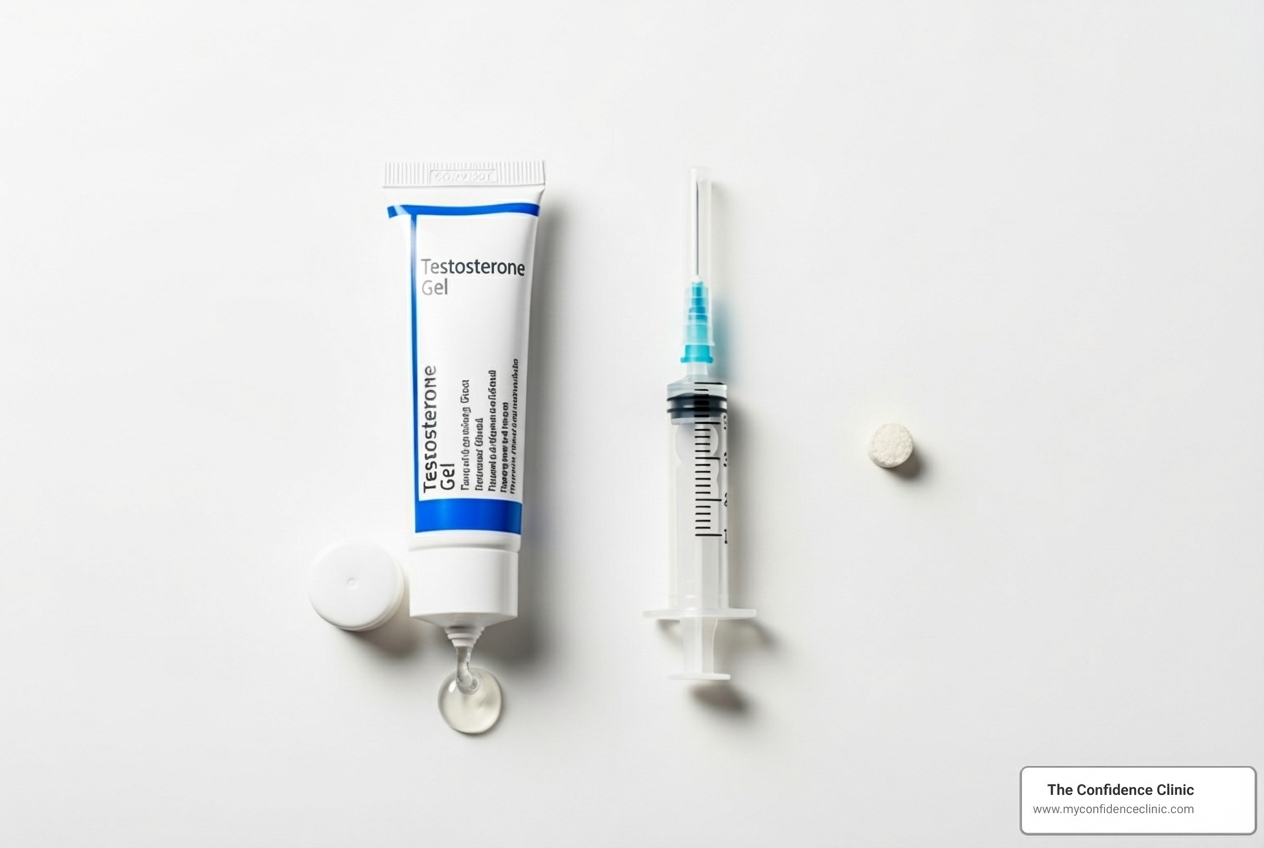
Crucially, TRT is only for men with diagnosed hypogonadism—low testosterone levels combined with an associated medical condition, as specified by the FDA. It is not a treatment for the normal, age-related decline in testosterone. The goal is to bring your body back into balance and help you feel like yourself again.
The Potential Benefits of TRT
For men with clinically diagnosed hypogonadism, Male Testosterone Replacement can offer life-changing benefits. While results vary, potential improvements include:
- Improved libido and erectile function
- Increased energy levels and better mood
- Improved concentration and reduced “brain fog”
- Increased muscle mass and strength
- Decreased body fat, especially around the abdomen
- Increased bone mineral density, reducing fracture risk over time
The Different Forms of Male Testosterone Replacement
There is no one-size-fits-all approach to TRT. The best method depends on your lifestyle, preferences, and how your body responds. Common forms include:
- Injections: A common and effective method administered weekly into the muscle or under the skin. Requires self-injection or clinic visits.
- Gels: A topical gel applied daily to the skin. Convenient but carries a risk of transference to others through skin contact.
- Patches: A transdermal patch applied to the skin daily. Provides steady levels but can cause skin irritation.
- Pellets (Implants): Small pellets implanted under the skin every 3-6 months. Offers a convenient, long-lasting, “set it and forget it” option.
- Oral Tablets: Newer formulations are taken twice daily. Convenient but require liver function monitoring.
- Nasal Gels: Applied inside the nostril multiple times a day. Avoids skin transfer but can be inconvenient.
At Center for Confidence, we’ll help you choose the Male Testosterone Replacement option that best fits your life.
The Potential Risks and Side Effects of TRT
While Male Testosterone Replacement offers significant benefits, it’s a medical treatment with potential risks that require careful management. At our clinics in Clearwater and Tampa, we prioritize vigilant monitoring to ensure your safety.

Potential side effects we monitor for include:
- Polycythemia: An increase in red blood cells that thickens the blood. We monitor blood counts to manage this risk.
- Gynecomastia: Breast tissue enlargement or tenderness, managed by monitoring estrogen levels.
- Acne or Oily Skin: A common side effect that is usually manageable.
- Fluid Retention: Can occur, especially in men with pre-existing heart conditions.
- Worsening Sleep Apnea: TRT may worsen symptoms in men with existing sleep apnea.
- Testicular Shrinkage: A decrease in testicle size due to suppressed natural testosterone production.
Individualized patient selection and continuous monitoring are key to ensuring the safety and efficacy of TRT.
How TRT Affects Fertility and the Prostate
Two common concerns are fertility and prostate health.
Fertility: TRT suppresses the body’s natural hormone signals, leading to decreased sperm production and potential infertility. For this reason, TRT is generally not recommended for men planning to have children soon. We can discuss alternative strategies, like HCG or Clomid, to boost testosterone while preserving fertility.
Prostate Health: The link between testosterone and the prostate has been extensively researched. Current evidence suggests TRT does not cause prostate cancer. Based on the “saturation model,” once prostate cells are saturated with testosterone, higher levels don’t further stimulate growth. TRT may cause a slight increase in PSA levels and is not contraindicated for men with BPH. For men with a history of treated prostate cancer, TRT is increasingly considered a safe option. Regardless, we conduct regular PSA monitoring and prostate exams.
Key Considerations for Male Testosterone Replacement in Older Men
For older men, weighing the benefits against potential risks is crucial.
- Cardiovascular Risks: While older studies raised concerns, recent large-scale trials (like the TRAVERSE trial) found that TRT did not increase the risk of major adverse cardiovascular events in appropriately selected men. However, caution is needed for those with pre-existing heart conditions.
- Other Conditions: Modern TRT methods are generally safe for the liver. For men with kidney disease, we monitor for fluid retention.
- Regular Monitoring and Supervision: This is the cornerstone of safe TRT. Self-medicating is extremely dangerous. Treatment must be managed by a qualified healthcare provider who can provide ongoing supervision and adjust treatment as needed.
Starting TRT: The Process and Natural Alternatives
If you suspect you have low testosterone, the first step is to consult a qualified healthcare provider, like a functional medicine specialist at Center for Confidence. We focus on identifying root causes and creating a custom treatment plan. When starting Male Testosterone Replacement, it’s crucial to have realistic expectations and a clear monitoring plan. Dose adjustments are common initially to find your ideal balance.
How Long Does It Take to See Results?
Patience is key with TRT, as results appear on a timeline. Individual results will vary.
- Libido: Improvements often appear within 3-6 weeks.
- Mood and Energy: You may feel more energetic and positive within 1-2 months.
- Muscle and Fat: Body composition changes typically become noticeable after 3-6 months, with proper diet and exercise.
- Bone Density: Improvements take the longest, usually 6 months or more.
If symptoms don’t improve after 3-6 months, we will explore other potential causes.
Natural Ways to Boost Testosterone
For men with borderline low T or those wanting to support hormonal health, lifestyle changes can help. These are beneficial for everyone, whether on TRT or not.
- Lifestyle Changes: Prioritize resistance training (lifting weights), get 7-9 hours of quality sleep, manage stress, and maintain a healthy diet to lose excess weight.
- Key Nutrients: Ensure adequate intake of Zinc, Vitamin D, and healthy fats from whole food sources.
Here’s a quick comparison of the effectiveness and timeline of natural methods versus TRT:
| Method | Effectiveness (for diagnosed hypogonadism) | Timeline for Noticeable Results |
|---|---|---|
| Male Testosterone Replacement (TRT) | High (restores levels directly) | Weeks to months |
| Resistance Training | Moderate (supports natural production) | Months |
| Healthy Diet/Weight Loss | Moderate (supports natural production) | Months |
| Adequate Sleep | Moderate (supports natural production) | Weeks to months |
| Stress Management | Moderate (supports natural production) | Weeks to months |
| Zinc/Vitamin D Supplementation | Low to Moderate (if deficient) | Months |
Frequently Asked Questions About TRT
Here are answers to common questions about Male Testosterone Replacement we hear from men in Clearwater and Tampa.
How long can a person stay on TRT?
For most men with diagnosed hypogonadism, TRT is a lifelong treatment. Because it suppresses the body’s natural testosterone production, stopping therapy will cause levels to return to their low baseline and symptoms to reappear. This long-term commitment requires ongoing medical supervision.
Does TRT increase the risk of prostate cancer?
This is a common concern, but modern research has largely debunked the historical fear. Current evidence shows that Male Testosterone Replacement does not cause prostate cancer in hypogonadal men. As discussed earlier, the “saturation model” helps explain why. While TRT is increasingly considered safe even for men with a history of treated prostate cancer, diligent screening through regular PSA tests and prostate exams remains a crucial part of our monitoring protocol.
How does TRT affect my mood and mental health?
TRT can have a profound positive impact on mental health. Many men with low testosterone suffer from mood swings, irritability, and even depressive symptoms. By restoring hormonal balance, TRT can lead to a more positive outlook, reduced irritability, and improved overall emotional well-being. While rare and typically linked to improper dosing, increased aggression is a potential side effect, which is why we carefully monitor your levels and how you feel.
Is TRT Right for You? The Next Steps
Deciding on Male Testosterone Replacement is a highly individualized decision that balances significant benefits against potential risks. While TRT can be a powerful therapy for men with diagnosed hypogonadism, it is not a universal solution. The most crucial step is getting a formal diagnosis from a qualified provider, as self-treating is dangerous.
At Center for Confidence, serving the Clearwater and Tampa communities, we take a holistic, functional medicine approach. We create a comfortable, non-judgmental space to discuss sensitive health issues and dig deeper to address the root causes of your concerns, not just the symptoms.
If you’re experiencing symptoms of low testosterone, don’t let uncertainty hold you back from feeling your best. We encourage you to take the next step. Visit our Testosterone Replacement Therapy in Clearwater page to learn more, or Request an Appointment with our compassionate team. We’re here to help you regain your confidence and optimize your health.


